

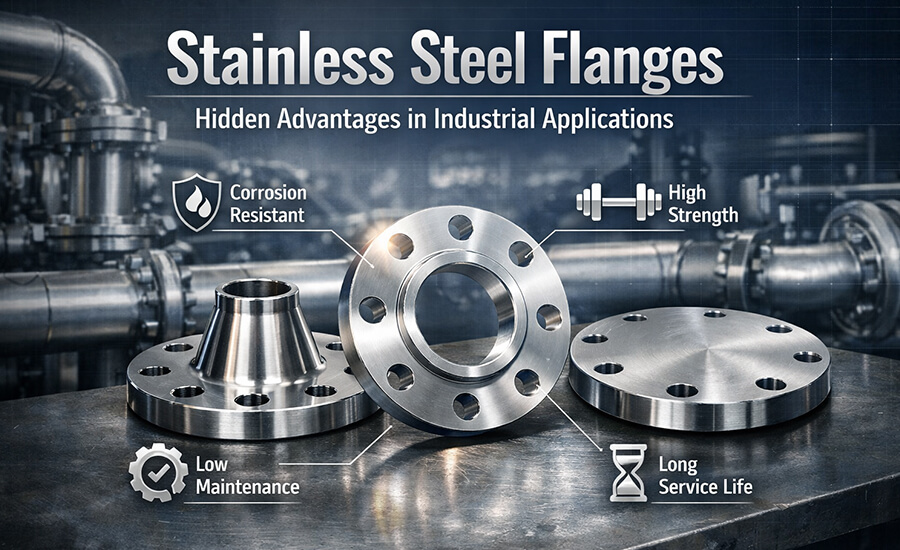
Intriguing Stainless Steel Flanges for Industrial Use
Stainless steel flanges play a crucial role in modern industrial systems by providing reliable connections between pipes, valves, pumps, and other equipment. Their strength, corrosion resistance, and durability make them an essential component in industries such as oil and gas, chemical processing, water treatment, and power generation. As industrial operations continue to evolve, stainless steel flanges have become increasingly intriguing due to their advanced designs, versatility, and performance under extreme conditions.
Understanding Stainless Steel Flanges
A stainless steel flange is a mechanical component used to connect pipes or equipment while ensuring a secure and leak-proof joint. These flanges are typically bolted together with a gasket placed between them to create a tight seal. Stainless steel, particularly grades such as 304, 316, and 321, is widely used because of its excellent resistance to corrosion, heat, and chemical exposure.
Industries prefer stainless steel flanges because they maintain structural integrity even in harsh environments. Their smooth surface also reduces contamination risks, making them suitable for food processing and pharmaceutical applications. We at Nakoda Steel Industry manufacture all types of Stainless Steel Flanges used in several industry.
Types of Stainless Steel Flanges
Different industrial requirements call for different flange designs. Some of the most commonly used stainless steel flanges include:
- Weld Neck Flanges:
These flanges feature a long tapered hub that provides reinforcement to the pipe connection. They are ideal for high-pressure and high-temperature systems because the design reduces stress concentration. - Slip-On Flanges:
Slip-on flanges slide over the pipe and are then welded in place. They are easy to install and commonly used in low-pressure applications where quick assembly is needed. - Blind Flanges:
Blind flanges are used to seal the end of a piping system. They allow easy access for inspection and maintenance while preventing the flow of fluids when necessary. - Socket Weld Flanges:
Socket weld flanges are designed for small-diameter pipes and provide a strong connection through a socket where the pipe is inserted and welded. - Threaded Flanges:
These flanges contain internal threads that allow them to be attached to threaded pipes without welding. They are useful in systems where welding may be hazardous.
Advantages of Stainless Steel Flanges
Stainless steel flanges offer numerous benefits that make them indispensable in industrial settings.
- Corrosion Resistance:
One of the primary advantages of stainless steel is its ability to resist corrosion, especially in environments exposed to moisture, chemicals, and salt. - High Strength and Durability:
Stainless steel flanges maintain structural stability under extreme pressure and temperature conditions, ensuring long service life. - Low Maintenance:
Because of their resistance to rust and wear, stainless steel flanges require minimal maintenance compared to other materials. - Hygienic Properties:
The non-porous surface of stainless steel prevents bacterial growth, making it suitable for industries where cleanliness is critical. - Versatility:
They can be used in a wide range of industries and applications, from heavy industrial plants to delicate processing systems.
Industrial Applications
Stainless steel flanges are widely used across multiple sectors. In the oil and gas industry, they help connect pipelines that transport crude oil and natural gas under high pressure. In chemical plants, their corrosion resistance ensures safe handling of aggressive chemicals. Power plants rely on them to maintain secure connections in steam and cooling systems. Additionally, water treatment facilities use stainless steel flanges to ensure reliable piping networks.
Emerging Innovations
Recent technological advancements have made stainless steel flanges even more intriguing. Modern manufacturing techniques such as precision forging, CNC machining, and improved heat treatment processes enhance their strength and dimensional accuracy. Some manufacturers also produce customized flanges tailored to specific industrial standards and project requirements.
Additionally, the use of advanced stainless steel alloys has improved resistance to extreme temperatures and aggressive chemical environments. These innovations help industries improve safety, efficiency, and operational reliability.
Conclusion
Stainless steel flanges remain a fundamental component in industrial infrastructure. Their durability, corrosion resistance, and adaptability make them indispensable in demanding environments. As industries continue to expand and modernize, innovations in stainless steel flange design and manufacturing will further enhance their performance and reliability. Understanding their types, advantages, and applications helps engineers and industry professionals select the most suitable solutions for their piping systems.
Contact Nakoda International for all your Stainless Steel needs.